
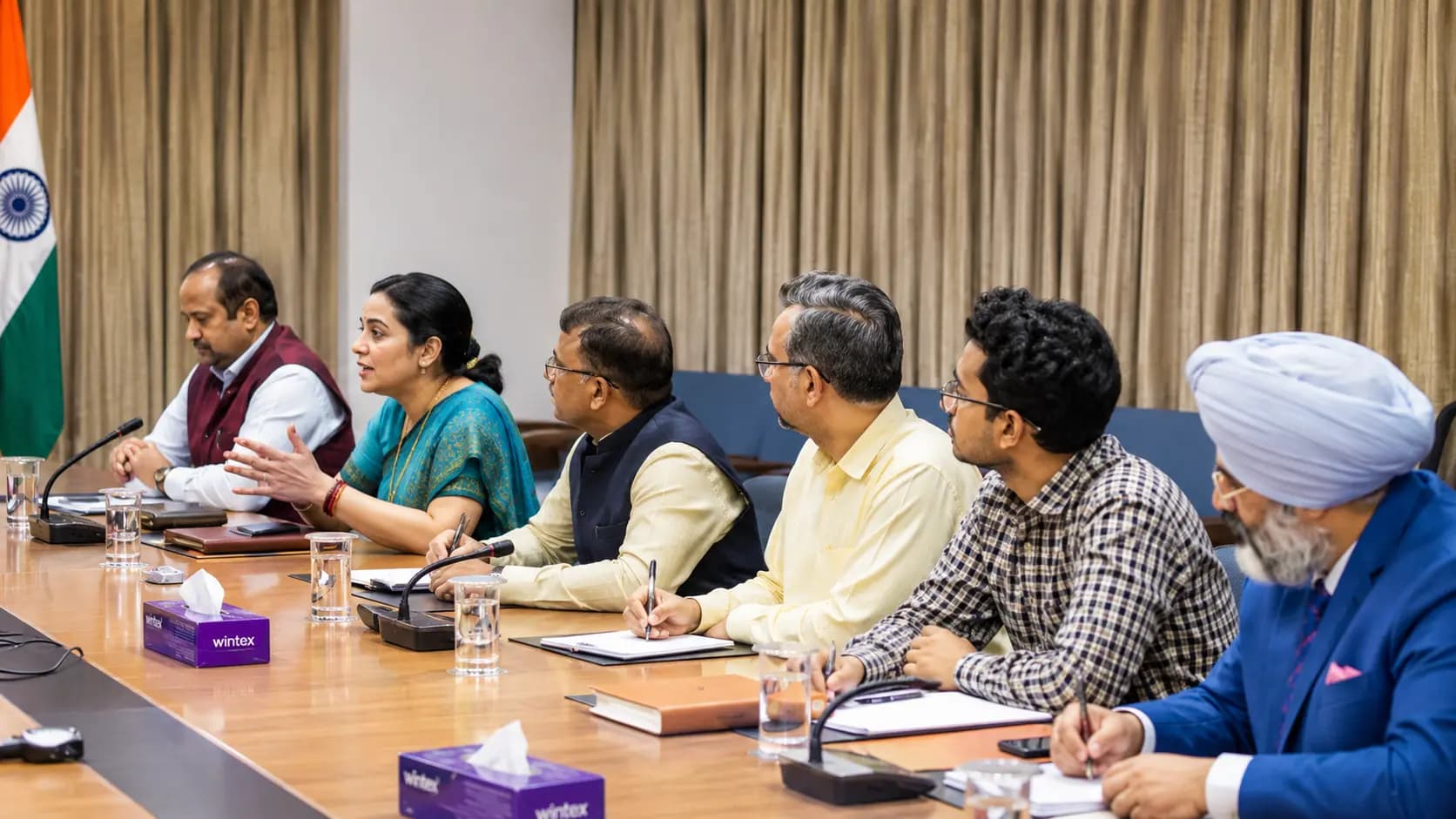
The Ministry of Micro, Small and Medium Enterprises (MSME) has signed a three-year memorandum of understanding (MoU) with Samsung India Electronics Private Limited to strengthen technical skill development and improve employment and self-employment opportunities for young people. The programme will initially be implemented across 15 MSME Technology Centres and target 1,600 trainees during its first year.
The MoU was signed on November 5, 2026, in the presence of Dr. Rajneesh, Additional Secretary and Development Commissioner, Ministry of MSME. The collaboration aims to connect technical training with industry requirements by combining the government's training infrastructure with Samsung's technical expertise.
Training Across 15 MSME Technology Centres
The programme will use the existing network of MSME Technology Centres to deliver industry-oriented training. The centres provide technical education, practical training and specialised facilities to support manufacturing and other industrial activities.
The 15 participating centres are located in Ludhiana, Hyderabad, Kolkata, Bhubaneswar, Ahmedabad, Mumbai, Aurangabad, Delhi, Chennai, Varanasi, Jamshedpur, Bengaluru, Greater Noida, Baddi and Kanpur. The network covers several states and regions, providing a wider reach for the initiative.
Training programmes will follow the National Skills Qualifications Framework (NSQF) and cover electronics, mobile phones, home appliances, installation, servicing and repair. These subjects are intended to develop practical capabilities required in electronics and consumer appliance service sectors.
The programme will initially enrol 1,600 trainees in its first year, with the number expected to increase gradually in subsequent years.
Samsung to Provide Technical Support and Training
Under the agreement, Samsung India will provide specialised training, technical support and Training of Trainers (ToT) programmes. The company will also support classrooms and laboratories with relevant products and tools to facilitate practical learning at the participating centres.
Training of Trainers will help instructors strengthen their technical knowledge and teaching capabilities. This is important for maintaining the quality of industry-oriented courses and ensuring that participants receive relevant technical instruction.
The curriculum will cover the repair, maintenance and installation of products such as mobile phones, tablets, smartwatches, televisions, air conditioners, washing machines and professional display products.
The collaboration will also provide participants with hands-on training, industry exposure, career counselling, internships and placement facilitation. These activities are intended to help trainees understand workplace requirements and prepare for technical roles.
Internship and Scholarship Opportunities
Successful trainees will receive a three-month on-the-job training opportunity with a monthly stipend of ₹12,000 through Direct Benefit Transfer (DBT). Samsung will facilitate these opportunities through its service network, allowing participants to gain workplace exposure and practical experience.
The programme will also provide scholarship support to eligible women and Divyangjan trainees. In addition, outstanding performers, including batch toppers, will be eligible for merit-based rewards.
These provisions are intended to make technical training more accessible while encouraging participants to perform well and develop industry-relevant skills.
Focus on Employment and Self-Employment
The initiative aims to create a pool of skilled workers for businesses operating in electronics and home appliance services. Participants completing the training may explore employment opportunities in installation, repair, maintenance and customer support.
The acquired skills may also help individuals consider self-employment by offering technical services, depending on their experience, resources and access to the necessary tools.
As households and businesses increasingly depend on smartphones, electronic devices and home appliances, the need for trained technicians to install, maintain and repair these products remains important. A stronger technical workforce can help service providers and MSMEs address skill requirements and improve the availability of repair and maintenance services.
However, completing the training programme does not guarantee employment. Career opportunities will depend on individual performance, industry demand and the availability of suitable positions.
Strengthening Industry-Institution Collaboration
A key objective of the MoU is to strengthen industry-institution linkages. Technical training institutions can better prepare students for workplace requirements when industry participants contribute to training content, equipment and practical exposure.
The partnership combines the MSME Technology Centres' infrastructure with Samsung's product knowledge and technical experience. This approach is intended to make training more relevant to the actual requirements of electronics servicing and home appliance maintenance.
Samsung's involvement in instructor development and practical training is also expected to support consistent delivery across the participating centres. The collaboration may help reduce the gap between technical education and the skills required by employers.
Supporting India's MSME Skill Ecosystem
Micro, Small and Medium Enterprises play an important role in India's manufacturing and service sectors. Businesses involved in electronics, equipment maintenance, distribution and consumer product support require workers with appropriate technical knowledge.
The availability of trained technicians can help these businesses address workforce requirements and improve service capabilities. Skill development programmes can also provide young people with pathways into technical occupations without requiring them to pursue longer academic programmes.
The three-year partnership between the Ministry of MSME and Samsung India provides a framework for expanding industry-oriented training through government-supported facilities. Its progress will depend on training quality, participation, instructor preparation and the availability of suitable internship and employment opportunities.
By combining practical instruction, technical support and workplace exposure, the initiative aims to strengthen the technical workforce while supporting India's MSME ecosystem.
Sources:- PIB