
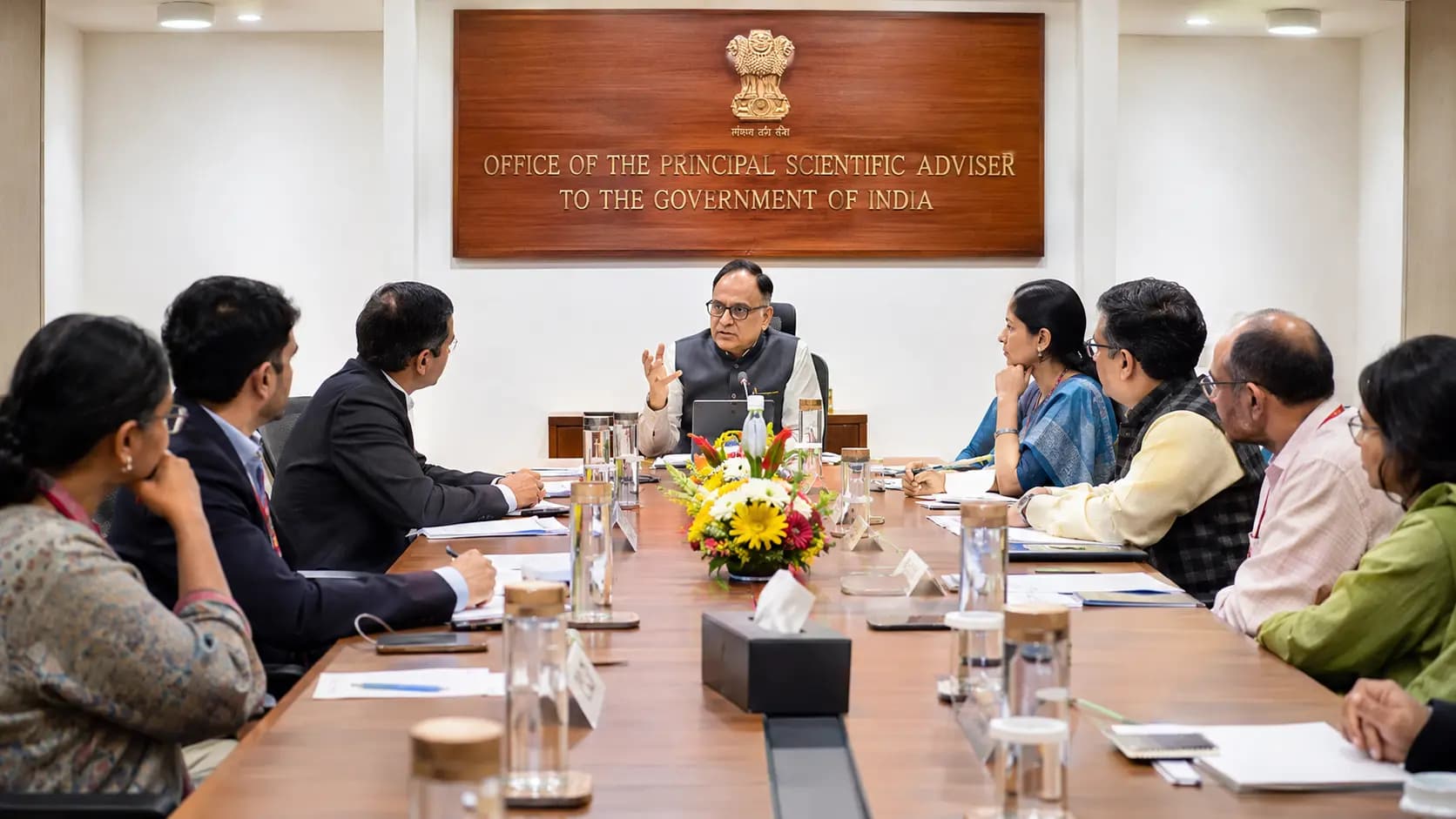
The Office of the Principal Scientific Adviser to the Government of India and the Department for Promotion of Industry and Internal Trade (DPIIT) have launched an application programming interface (API) integration between the Startup India Portal and the Indian Science, Technology and Engineering Facilities Map (I-STEM) Portal. The initiative aims to help recognised startups discover scientific equipment, research facilities and testing infrastructure available across the country.
The integration was launched on November 6, 2026, under the chairmanship of Principal Scientific Adviser Professor Ajay Kumar Sood. It is intended to strengthen the connection between India's startup ecosystem and publicly funded research infrastructure, particularly for deep-tech businesses that require specialised facilities during product development.
According to the government announcement, I-STEM listed 31,540 equipment items across 4,044 registered institutions as of November 6, providing startups and researchers with access to information about a wide range of scientific facilities.
Connecting Startup India With Research Infrastructure
The Startup India Portal, managed by DPIIT, supports the country's startup ecosystem by providing information about government initiatives and opportunities for recognised startups. The I-STEM Portal helps users discover scientific equipment and research facilities available at academic and research institutions.
The new API integration connects the two platforms, enabling DPIIT-recognised startups to identify relevant research infrastructure through the Startup India ecosystem.
This is particularly important for startups working in areas such as biotechnology, electronics, advanced materials, medical technology and other deep-tech sectors. Developing products in these fields often requires specialised laboratories, testing equipment and technical facilities that can be expensive for young companies to establish independently.
By improving access to existing infrastructure, the integration aims to reduce the need for startups to make substantial initial investments in equipment before validating their technologies.
How the Integration Will Work
The integration allows the two portals to exchange relevant information through an API-based system. It also supports automated verification of a startup's DPIIT recognition status, helping eligible businesses connect with the I-STEM platform.
Startups can discover available research facilities, identify suitable equipment and initiate requests for access through the connected digital system.
The government has also proposed incorporating Single Sign-On (SSO) functionality in subsequent phases. This feature is expected to make the process more convenient by allowing users to access connected services through a streamlined login system. However, SSO is a planned feature and should not be confused with the API integration already launched.
The integration does not guarantee automatic access to every facility. Individual requests will continue to be assessed by the respective host institutions. Approval may depend on equipment availability, technical suitability, applicable charges, safety requirements and institutional permissions.
Reducing Research and Development Costs
Access to specialised infrastructure is an important challenge for startups developing technology-intensive products. Equipment used for prototyping, material testing, product validation and scientific research can involve substantial purchase and maintenance costs.
For early-stage companies, these expenses can affect the time and resources available for product development. Some businesses may also require specialised equipment only at particular stages of research rather than throughout the year.
The I-STEM platform provides a way to identify facilities that may already exist within universities, laboratories and research institutions. Connecting it with Startup India could make the discovery process easier for recognised startups.
The initiative is expected to help reduce duplication of capital-intensive infrastructure, improve the utilisation of publicly funded equipment and encourage cooperation between research institutions and businesses.
Focus on Deep-Tech Startups
Deep-tech startups often work on technologies that require longer research and development cycles. Unlike many software businesses, they may need access to physical laboratories, specialised instruments and technical validation facilities before commercialising their products.
For example, a startup developing electronic components may require testing equipment to evaluate performance and reliability. A biotechnology company may need laboratory infrastructure, while an advanced materials business may require specialised facilities to examine material properties.
The portal integration is intended to make such resources easier to discover and potentially access through participating institutions.
At the launch, Professor Ajay Kumar Sood highlighted the importance of connecting startup requirements with the country's existing scientific capabilities. He noted that improved infrastructure access could lower research costs and strengthen collaboration between industry and academia.
DPIIT Additional Secretary Ateesh Kumar Singh also highlighted the potential benefits for deep-tech startups, particularly in product development, prototyping, testing and technology validation.
Implementation and Future Requirements
The effectiveness of the integration will depend on how many research institutions participate and how regularly facility information is updated. Accurate details about equipment, availability, technical specifications and access conditions will be important for startups planning research activities.
Institutions will also need clear processes to manage requests, assess technical requirements and coordinate access with external users.
The proposed SSO functionality and continued development of the connected portals could further simplify the user experience. However, wider institutional participation and consistent coordination will be necessary to achieve the initiative's objectives.
Strengthening India's Innovation Ecosystem
The integration of Startup India and I-STEM represents an effort to connect entrepreneurial activity with the country's scientific infrastructure. By improving the discovery of existing research and testing facilities, the initiative could help startups manage development costs and access capabilities that might otherwise be difficult to obtain.
Its long-term impact will depend on how effectively startups use the platform and how actively research institutions make their facilities available. If implemented effectively, the initiative could strengthen industry-academia collaboration and support the development of technology-based businesses in India.
Sources: PIB